
Unveiling the Fallacy of Free Marketing Courses in Today's Industry
Introduction
In the ever-evolving landscape of marketing education, the allure of free courses often leads individuals towards apparent shortcuts. Understanding the nuances between these free offerings and established industry standards is vital.
Misconceptions
The proliferation of free marketing courses presents a deceptive illusion of expertise and knowledge. Yet, these often fall short in delivering comprehensive learning, a significant misconception fueling their popularity.
Industry Standards
Navigating through the challenges within the marketing industry requires a solid foundation of knowledge and skills, which free courses might not adequately provide.
Course Evaluation
Identifying the real value within marketing courses demands a critical evaluation of content, credibility, and applicability in the dynamic industry landscape.
Expert Insights
Professionals in the field share valuable perspectives shedding light on the disparities between free and quality-paid courses.

Learning Outcomes
Understanding what to expect from quality courses sets a realistic benchmark for knowledge acquisition and skill development.
Free vs. Paid
Comparing and contrasting the offerings between free and paid courses reveals stark differences in content depth, support, and overall learning experience.
Practical Value
Implementing the knowledge gained from marketing courses, particularly the practical aspects, distinguishes genuine learning from superficial information.
Quality Indicators
Several factors contribute to defining the quality of a marketing course, ensuring it meets industry-relevant standards.
Consumer Awareness
Recognizing the difference between quality content and illusory promises is crucial for individuals seeking genuine learning opportunities.
Online Resources
Identifying reliable platforms and resources aids in making informed decisions about where to invest time and effort for learning.

Testimonials
Real experiences and testimonials serve as valuable indicators of the effectiveness and credibility of a marketing course.
Common Pitfalls
Traps within free marketing courses often lead individuals into wasteful pursuits, diverting them from genuine learning pathways.
Industry Impact
Understanding the effects of course quality on both career prospects and the broader industry dynamics illuminates the significance of proper education.
Cost-Benefit Analysis
Weighing the pros and cons of free marketing courses against paid alternatives provides a clearer perspective on their actual value.
Realistic Expectations
Setting realistic expectations regarding the scope and depth of knowledge gained from these courses is essential for learners.
Effective Learning
Adopting strategies for effective learning amplifies the benefits derived from any marketing course, whether free or paid.
Long-Term Benefits
Assessing the sustainability and enduring value of acquired knowledge over time emphasizes the importance of quality education.
Industry Adaptation
Adapting to changing industry trends through education becomes paramount, demanding courses that evolve alongside the marketing landscape.
Addressing Doubts
Clarifying misconceptions and doubts surrounding free marketing courses aids individuals in making informed choices.
Educational Ethics
Ensuring integrity and ethical standards within marketing education is pivotal for the industry's credibility and learners' trust.
Quality Checklists
Providing a checklist for evaluating course quality assists learners in selecting authentic and beneficial courses.
Finding Legitimate Courses
Tips for authenticity in course selection equip individuals with the tools to identify genuine learning opportunities.
Conclusion
Unveiling the fallacy of free marketing courses highlights the critical need for informed choices and underscores the irreplaceable value of quality education in the marketing domain.
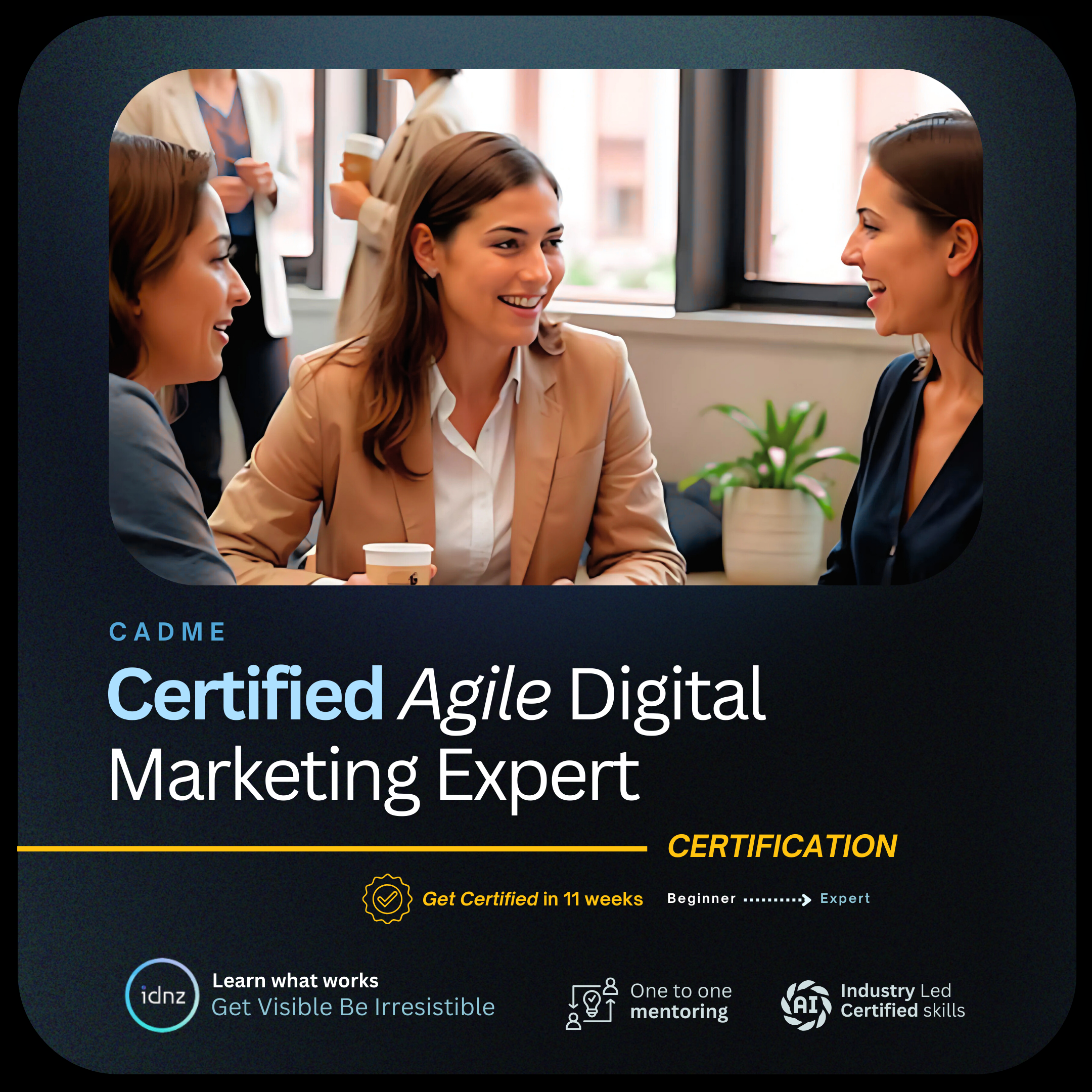
The Only Agile Digital Marketing Certification Built for the AI Era
The Certified Agile Digital Marketing Expert (CADME) is New Zealand’s first and only agile digital marketing certification — built for marketers who want to move beyond channels and into owning full-funnel strategy, AI systems, and business growth.
This isn’t a digital marketing course.
This is AI-powered, full-stack marketing strategy.
Across 11 hands-on sprints over 11 weeks, you’ll master:
SEO and search strategy that captures high-intent demand
Paid media across Google Ads and social platforms
AI-driven content systems that scale production and performance
Email marketing and lifecycle automation
Conversion optimisation (CRO) and high-performing landing experiences
Customer experience (CX), UX, and omni-channel journey design
Data analytics, attribution, and performance modelling
Budget planning, forecasting, and ROI defence
Delivered fully online with weekly one-to-one mentoring, CADME is built for real-world execution — using your business or a live case study.
Validated against platforms like Google, Meta, LinkedIn, and Microsoft — and designed to outperform outdated NZQA frameworks that haven’t kept pace with AI-driven marketing ecosystems.
Why Digital Marketing Is the Highest-Leverage Career Move in 2026
Digital marketing is no longer a collection of channels.
It’s a connected growth system.
And it’s being rewritten in real time.
AI is transforming how campaigns are created, optimised, and scaled
Businesses are shifting from channel-based execution to system-based growth
Customer journeys are now multi-touch, multi-platform, and data-driven
Companies are prioritising marketers who can connect strategy to revenue
The gap is widening fast.
Most marketers are still:
Running campaigns in silos
Chasing platform tactics
Reporting on disconnected metrics
The ones winning in 2026 are:
Designing end-to-end marketing ecosystems
Leveraging AI across every stage of the funnel
Connecting traffic → experience → conversion → retention
That’s where the career acceleration happens.
Where CADME Positions You
CADME sits at the exact inflection point between execution and leadership across the entire digital ecosystem.
It’s not another digital marketing course.
It’s a career leverage system that signals:
You understand how modern marketing actually works (AI + data + systems)
You can connect multiple channels into a unified growth strategy
You can drive measurable business outcomes, not just campaign metrics
You can lead marketing direction at a strategic level
This is what employers are hiring for now.
And what most marketers still can’t do.
Who CADME Is Built For
CADME is designed for professionals ready to step into high-impact, strategic marketing roles:
Digital marketers moving into strategist, manager, or leadership roles
Marketing managers who need full-stack capability across all channels
Business owners who want to build scalable, predictable growth systems
Agency professionals looking to move from execution into strategy
Traditional marketers upgrading into an AI-first, omni-channel environment
Graduates with experience aiming to accelerate into mid-senior roles faster
No coding. No fluff.
Just strategic, commercial, and system-level execution.
CADME vs CASME: Ecosystem Control vs Platform Mastery
If you’re deciding between certifications, here’s the reality:
CADME = Full ecosystem control
→ SEO, paid media, content, email, UX, analytics, AI systemsCASME = Platform depth (social)
→ Multi-platform strategy, AI content, social commerce, paid social
Most high-performers don’t choose one.
They stack them.
CADME builds ecosystem control.
CASME builds platform authority.
Together, they position you as a complete modern marketer.
FAQs
What factors contribute to defining a high-quality marketing course?
A high-quality marketing course is often characterised by comprehensive content, industry relevance, experienced instructors, practical application opportunities, and recognised accreditation or endorsements from reputable institutions or industry professionals.
In what ways do free marketing courses distinguish themselves from paid alternatives?
Free marketing courses typically lack in-depth content, personalised support, certification, and may carry limited access to updated resources or practical exercises compared to their paid counterparts. Paid courses often offer structured curriculums, additional resources, and expert guidance.
Can individuals establish successful careers solely through free marketing courses?
While free marketing courses offer knowledge, success in a marketing career typically requires a blend of comprehensive learning, practical application, networking, and mentorship. Paid courses tend to offer a more structured pathway to acquiring these elements.
How reliable are testimonials in assessing the quality of marketing courses?
Testimonials can provide insights into others' experiences but might not always represent a comprehensive view. Consider a variety of testimonials alongside other factors like course content, industry recognition, and instructor expertise.
What are the prevalent pitfalls that individuals might encounter within free marketing courses?
Common pitfalls include outdated content, lack of interactive learning experiences, absence of credible certifications, limited industry relevance, and sometimes, hidden costs or upsells for supplementary materials.
How can someone effectively distinguish legitimate marketing courses from misleading ones?
Checking for accreditation, industry recognition, reviews from credible sources, examining course content depth, assessing instructor expertise, and exploring additional support or resources can help distinguish legitimate courses.
Are accreditation and industry recognition crucial factors in evaluating marketing courses?
Accreditation and industry recognition validate the course's credibility and relevance. They assure learners that the course meets certain standards set by industry experts or educational governing bodies.
Do free marketing courses offer certifications or credentials with industry recognition?
Free courses may lack formal certifications recognised by industry professionals or employers, which could impact their value in the job market. Paid courses often offer certifications upon completion.
What role does ongoing mentorship or support play in determining course quality?
Mentorship and ongoing support significantly enhance learning experiences. Paid courses usually provide dedicated support channels and access to instructors, facilitating better understanding and application of concepts.
Are there hidden costs or limitations associated with free marketing courses?
Free courses might have hidden costs, such as charges for certificates, restricted access to advanced materials, or upselling additional content. Understanding these limitations is crucial before enrolment.